
Cit.ED
Explore
Everything on Cit.ED, newest first: short videos, research posts, podcast episodes and the evidence behind them.

Research
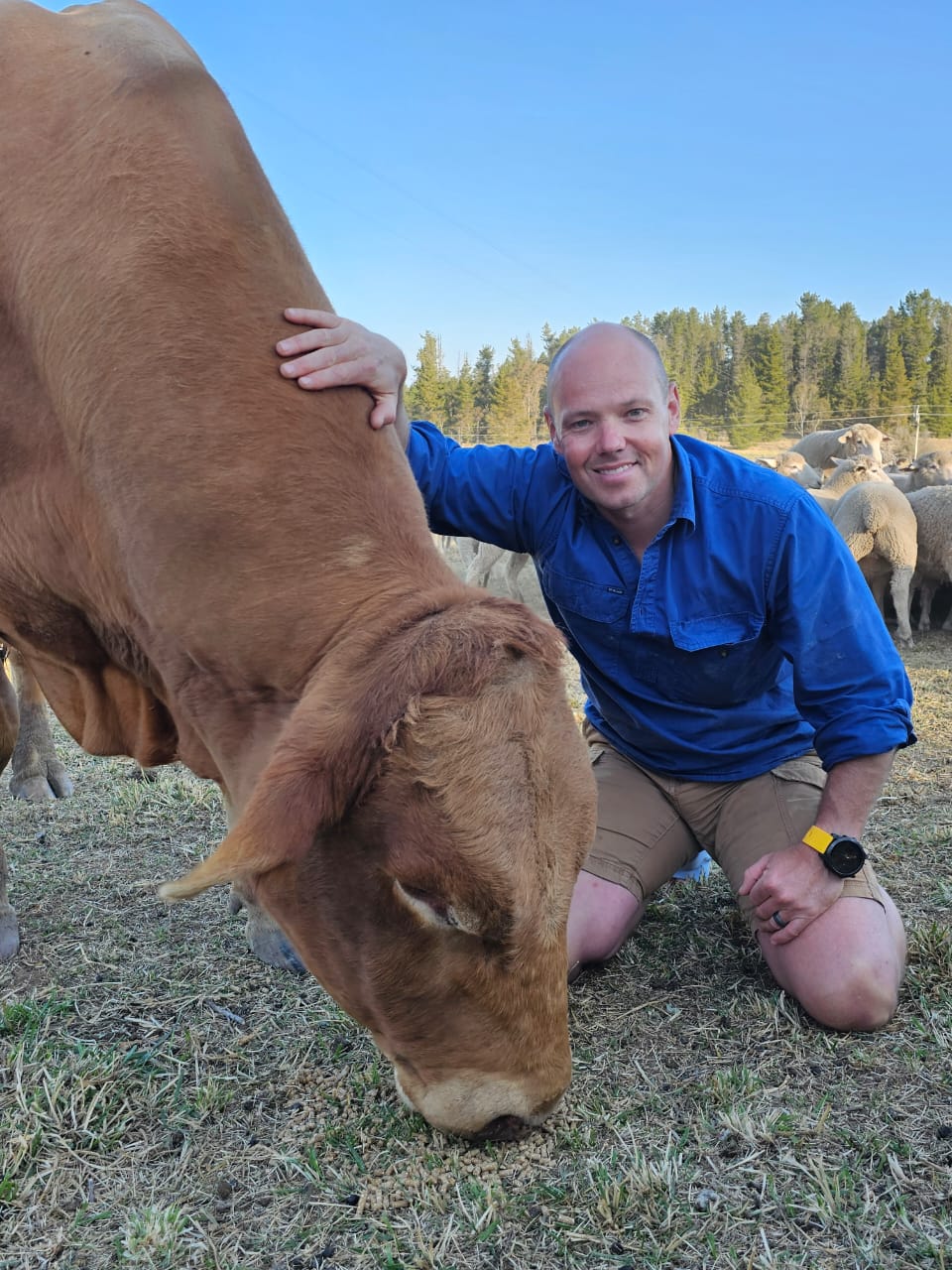
Targeted genetic improvement can reduce the environmental impact of beef from beef x dairy production systems
We present the first LCA to quantify the environmental benefits of genetic improvement targeted for improved feed efficiency and growth in BxD systems in the US and UK, yielding a 4.2-8.7% reduction in overall environmental footprint across systems in 2024.
 Rudolph Linde
1 source
Practice · Screens
I tried “TV time into talk time” with my Grade 1s
A week of narrating the class video instead of hushing everyone. What changed, what didn’t.
 Mrs Hartley
Practice · Early childhood
Three ways to turn TV time into talk time
Co-viewing with a child is associated with better language outcomes than children watching alone.
 Dr Naledi Mokoena
1 source
 💬 Discussion
Discussion · Episode
How to Make a Difference: Part 1
Why do some people act on the possibilities before them, while others come to believe that nothing they do will make a difference? Psychologist Martin Seligman describes his groundbreaking research on learned helplessness, and explains how the stories we tell ourselves about setbacks can shape what we do next. We also explore how optimism can help us rediscover our ability to change things for the better. If you have a question or comment about the science of optimism and pessimism that you'd be willing to share with the Hidden Brain audience after listening to this episode, please find a quiet room and record a voice memo on your phone. Email the file to us at feedback@hiddenbrain.org. Use the subject line: “How to Make a Difference.” If you love Hidden Brain in audio, check out our video series on YouTube. You'll find episodes there about memory, focus, getting unstuck, and much more at youtube.com/@hiddenbrain. Hosted by Simplecast, an AdsWizz company. See pcm.adswizz.com for information about our collection and use of personal data for advertising.
Dr Naledi Mokoena
Discussion · Screens
The screen-time number parents ask me for — and why I’ve stopped giving one
Responding to Dr Mokoena. In the clinic the question is always “how many minutes”. Here’s what I say now.
 Marius de Villiers
 💡 Idea
Idea · Episode
Miranda Fricker on Blame
We blame people, and sometimes we blame institutions. Miranda Fricker investigates the nature of blame and its functions, draws some important distinctions, and considers the metaphysical implications of this practice.
 Dr Amara Okafor
Lived experience · Screens
Our screen rules at home (and why we changed them)
Background TV in the home is linked to less adult-child conversation.
 Sipho Dlamini
1 source
Research · Screens
Why “screen time” is the wrong number to worry about
Background television is associated with fewer adult words directed at toddlers.
Dr Naledi Mokoena
3 sources
Idea · Play
What I’m taking from the play debate into my research project
Two posts here shaped my literature review more than the textbook did.
 Thandi Nkosi
Discussion · Reading
Where I part ways with “read the effect sizes properly”
Agree on the maths. Disagree on what a small effect means for a classroom of thirty.
Dr Amara Okafor
Research · Screens
Reading the effect sizes properly
In pooled studies, more screen use is associated with slightly weaker child language skills, and the associations are small.
 J. Pillay
1 source
Discussion · Sleep
Is the screens-and-sleep evidence as one-sided as it sounds?
A question for Dr Mokoena after the sleep-reviews post.
Thandi Nkosi
Research · Reading
Does reading aloud still help after a child can read alone?
Shared book reading with young children is consistently linked to stronger language and early literacy outcomes.
Dr Amara Okafor
2 sources
Lived experience · Schools
What I changed in my Grade 1 class
Interactive reading, where adults ask questions and children respond, is linked to gains in oral language in early education.
Mrs Hartley
1 source
 🔬 Research
Research · Episode
Why we should all be 'bookmaxxing'
Remember your mom, dad and teachers telling you to read because it’s good for you? Well, a compilation of the latest research shows they were right. “Reading is one of the simplest and most accessible activities for actually supporting cognitive performance, brain health, mental health, but also overall wellbeing throughout our lives,” said Christelle Langley, a cognitive neuroscientist at the University of Cambridge and co-author of review, published in the journal Psychological Medicine. The review looked specifically at recreational reading — reading for fun — and found broad benefits for children, adolescents and older adults. This episode, we dive deep into the joys and health benefits of bookmaxxing. Interested in the science of reading? Email us your question at shortwave@npr.org. Support public media with NPR+ and enjoy perks for over 25 podcasts like this one. This show’s perks include sponsor-free listening. Learn more at plus.npr.org. See pcm.adswizz.com for information about our collection and use of personal data for sponsorship and to manage your podcast sponsorship preferences. NPR Privacy Policy
Dr Amara Okafor
 🔬 Research
Research · Episode
687. Are Prediction Markets the Best Forecasting Tool Ever — or Just Another Casino?
The promise is that they can beat the experts at predicting inflation, elections, and FDA approvals. But right now, roughly 90 percent of the action is sports. Is this a future we want to bet on? Stephen Dubner speaks with, among others, the C.E.O. of Kalshi. (Part one of a two-part series.) SOURCES:Robin Hanson, professor of economics at George Mason University. Nicole Kagan, head of research at Kalshi. Tarek Mansour, co-founder and C.E.O. of Kalshi. RESOURCE:"Kalshi and the Rise of Macro Markets," by Anthony Diercks, Jared Dean Katz, and Jonathan Wright (Federal Reserve Board, 2026). "Slowly, Then All At Once: What Mamdani's Victory Tells Us About Information Aggregation," (Kalshi Research, 2026). "Futarchy: Vote Values, But Bet Beliefs," by Robin Hanson (2000). "The Use of Knowledge in Society," by Friedrich Hayek (American Economic Review, 1945). EXTRAS:"The Economics of Sports Gambling," by Freakonomics Radio (2019). "How to Be Less Terrible at Predicting the Future," by Freakonomics Radio (2016). "The Folly of Prediction," by Freakonomics Radio (2011). Hosted by Simplecast, an AdsWizz company. See pcm.adswizz.com for information about our collection and use of personal data for advertising.
J. Pillay
 🔬 Research
Research · Episode
The latest on AI panic — and whether it's justified
AI is in the news again – for its potential to end civilization. A researcher at Anthropic resigned very publicly last week, citing concerns about the accelerating capabilities of AI and what he called “irresponsible” behavior from major AI companies Anthropic and OpenAI. Following his resignation, the leaders of both companies called for an internationally cooperative, industry-wide slowdown on advanced AI development. And Wednesday, OpenAI disclosed six more incidents of “unexpected or concerning model behavior” and debuted a new framework for reporting misalignments. So, given all these events, how worried should we be about the future of AI? And what safety measures are – or could be – set in place to safeguard humanity? NPR’s power and policy reporter Huo Jingnan reports. Interested in more science and technology news? Email us your question at shortwave@npr.org. Support public media with NPR+ and enjoy perks for over 25 podcasts like this one. This show’s perks include sponsor-free listening. Learn more at plus.npr.org. See pcm.adswizz.com for information about our collection and use of personal data for sponsorship and to manage your podcast sponsorship preferences. NPR Privacy Policy
Dr Amara Okafor
 👩👧 Lived experience
Lived experience · Episode
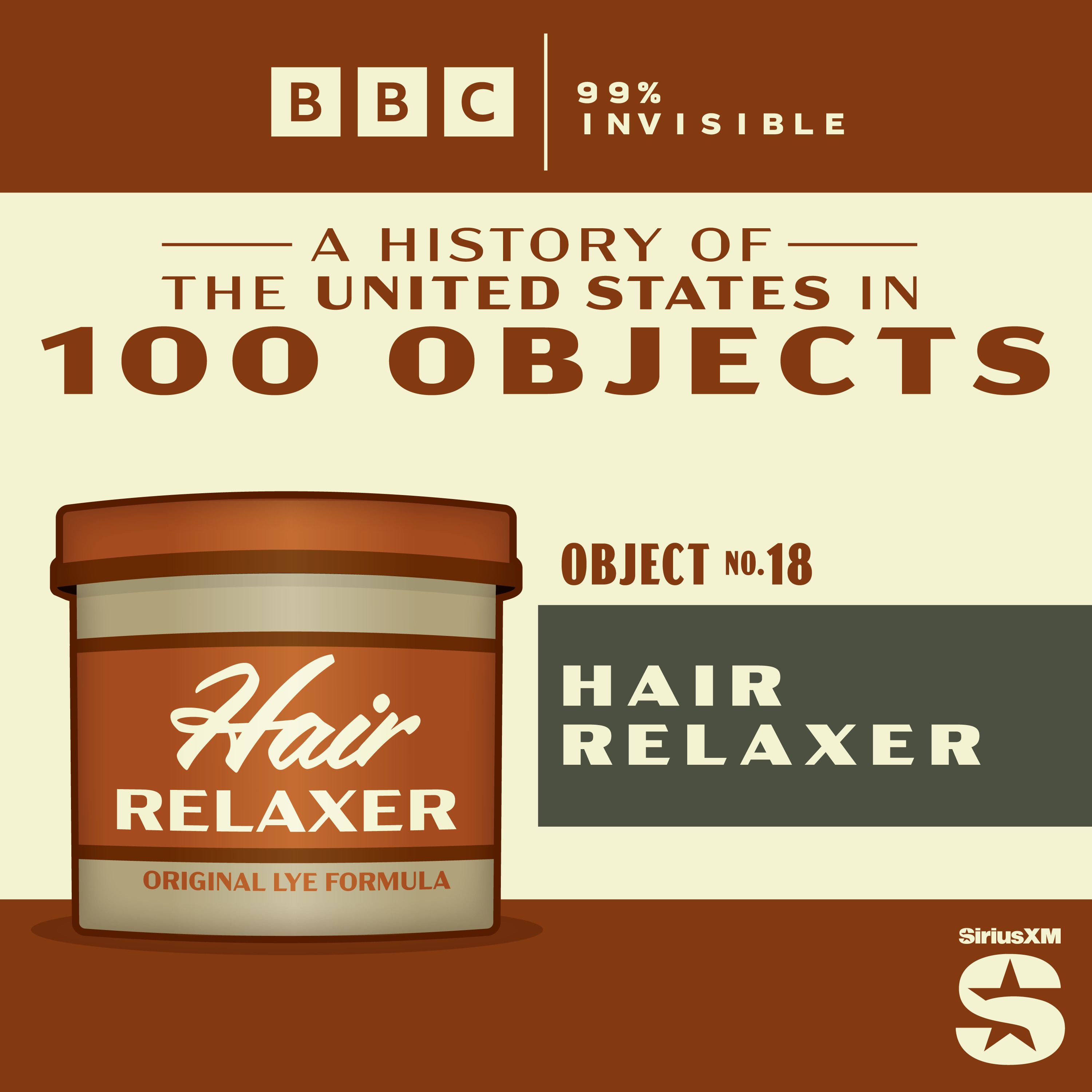
100 Objects #18: Hair Relaxer
Somewhere between 85 to 95 percent of Black women in the United States have used a chemical hair relaxer at least once in their lifetime. It is a ubiquitous American product with a complicated legacy: it built Black wealth and opened economic doors, but also taught generations to see their hair as a problem to be solved. And now research is revealing a physical cost. Roman Mars and producer Priscilla Alabi explore how a single product became a mirror for all of America's contradictions. A History of the United States in 100 Objects is a production of 99% Invisible and BBC Studios. Subscribe to SiriusXM Podcasts+ to listen to new episodes of 99% Invisible ad-free and a whole week early. Start a free trial now on Apple Podcasts or by visiting siriusxm.com/podcastsplus. Hosted by Simplecast, an AdsWizz company. See pcm.adswizz.com for information about our collection and use of personal data for advertising.
Sipho Dlamini
Discussion · Play
Is unstructured play losing ground?
Evidence that pretend play itself causes developmental gains is weaker and more mixed than often claimed.
J. Pillay
1 source
 📚 Resource
Resource · Episode
Archive: Rosalind Franklin
Misha Glenny delves in to the In Our Time archive to select ten episodes for listeners to revisit. His seventh choice is the pioneering scientist Rosalind Franklin (1920 - 1958), first released in February 2018. During her distinguished career, Franklin carried out ground-breaking research into coal and viruses but she is perhaps best remembered for her investigations in the field of DNA. In 1952 her research generated a famous image that became known as Photograph 51. When the Cambridge scientists Francis Crick and James Watson saw this image, it enabled them the following year to work out that DNA has a double-helix structure, one of the most important discoveries of modern science. Watson, Crick and Franklin's colleague Maurice Wilkins received a Nobel Prize in 1962 for this achievement but Franklin did not and today many people believe that Franklin has not received enough recognition for her work. With: Patricia Fara President of the British Society for the History of Science Jim Naismith Interim lead of the Rosalind Franklin Institute, Director of the Research Complex at Harwell and Professor at the University of Oxford Judith Howard Professor of Chemistry at Durham University Producer: Victoria Brignell. Reading list: Jenifer Glynn, My Sister Rosalind Franklin (Oxford University Press, 2012) Kersten T. Hall, The Man in the Monkeynut Coat: William Astbury and the Forgotten Road to the Double-Helix (Oxford University Press, 2014) Brenda Maddox, Rosalind Franklin: The Dark Lady of DNA (HarperCollins, 2002) Anne Sayre, Rosalind Franklin and DNA (first published 1975; W. W. Norton, 2000) James D. Watson, The Double Helix: A Personal Account of the Discovery of the Structure of DNA (first published 1968; W&N, 2010) In Our Time is a BBC Studios production Spanning history, religion, culture, science and philosophy, In Our Time from BBC Radio 4 is essential listening for the intellectually curious. In each episode, host Misha Glenny and expert guests explore the characters, events and discoveries that have shaped our world.
J. Pillay
Practice · Reading
Do phonics screeners predict anything?
Reviews of reading research support explicit, systematic phonics instruction in the early stages of learning to read.
Mrs Hartley
1 source
 🔬 Research
Research · Episode
When batteries get a facelift, so does renewable energy
For years, renewable energy companies have faced a problem: How to store the mass amounts of energy they produce for later use. Batteries may be just the solution. In California, there's now enough grid-scale battery storage to power millions of homes for a few hours. Battery power is often the second largest source of energy on a given day in the state. So, we're revisiting the fast-growing technology with Cooper Katz McKim, a producer on The Indicator from Planet Money. Listen to the three-part battery series. Have questions about the future of energy? Contact us at shortwave@npr.org. Support public media with NPR+ and enjoy perks for over 25 podcasts like this one. This show’s perks include sponsor-free listening. Learn more at plus.npr.org. See pcm.adswizz.com for information about our collection and use of personal data for sponsorship and to manage your podcast sponsorship preferences. NPR Privacy Policy
Dr Amara Okafor
Research · Sleep
Screens before bed: what the sleep reviews actually say
Screen use is consistently associated with later bedtimes and shorter sleep in school-aged children.
Dr Naledi Mokoena
1 source